
Many migrants and refugees who arrive in the Netherlands through forced migration step not only into a new country, but also into a life shaped by past traumas, uncertain journeys, the stress of asylum processes, and the struggle to rebuild their lives. The psychological burden brought by this process often makes the need for informed support and guidance unavoidable.
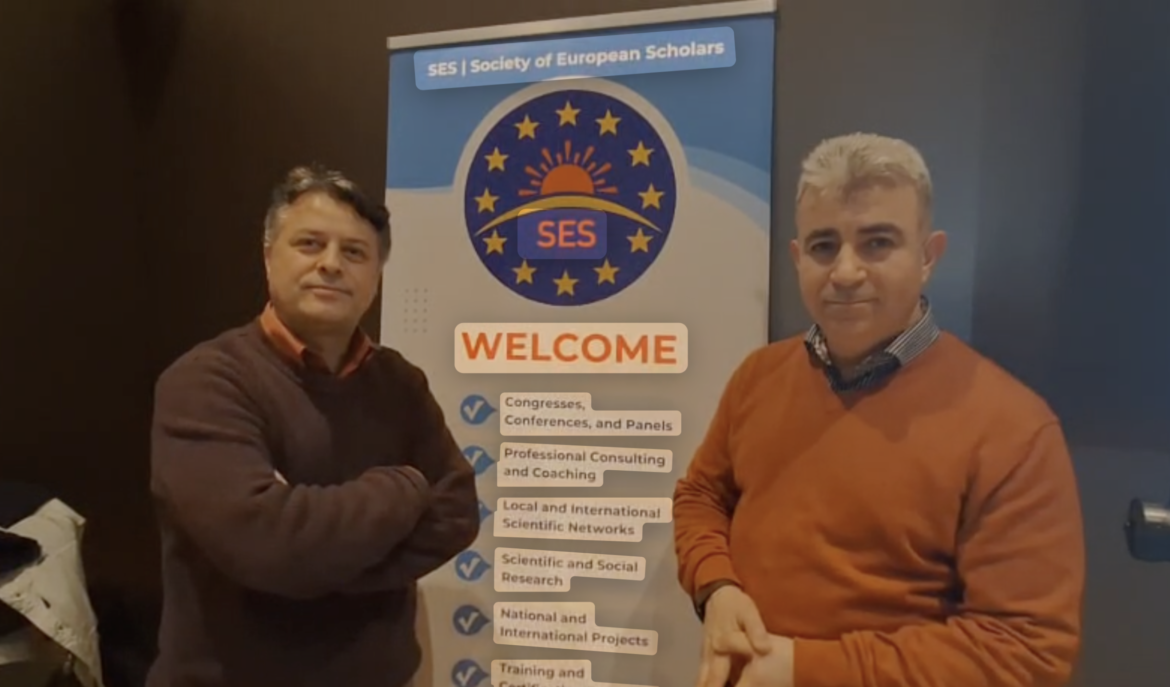
In response to this need, Stichting Harmonie Limburg Foundation, operating in the Limburg province of the Netherlands, organized a comprehensive psycho-education program for migrants and refugees. The program was carried out with the support of SES – Society of European Scholars and focused on migration, trauma, and psychological resilience.
The program was held at the Dorsphoesd’n Driehoek Hall in the city of Wessem, Limburg. Key topics such as trauma frequently encountered during the migration process, anxiety, post-traumatic stress disorder (PTSD), and depression were addressed from a multidimensional perspective.
The program was delivered with contributions from academics affiliated with SES. During the seminar, Sociologist Prof. Dr. İbrahim Kurt and Specialist Psychological Counselor İsmail Çakır shared their academic expertise and field experience, examining the relationship between migration and trauma.
The training was conducted with active participant involvement and supported by interactive exercises and concrete examples. The primary aim was to help participants better understand the psychological challenges migrants face in their daily lives.
“Trauma Is Not Only What Happens, but the Meaning Attributed to It”
Presentations emphasized that trauma is shaped not only by experienced events, but also by the meanings individuals assign to those events. Uncertainty during migration, employment and integration challenges, language learning, driving license and education exams were described as processes that can gradually turn into pressure affecting one’s self-perception.
Speakers noted that this pressure is often linked to childhood-learned patterns of “success,” “acceptance,” and “self-worth,” which may be reactivated during migration. It was also highlighted that individuals who struggle to confront their own emotions and behaviors may tend to focus on changing their environment instead. Sustainable change, however, was emphasized as being possible only through leading by example.
From Values to Character
The seminar introduced a “5-Step Model” explaining how values transform into character. The process, beginning with knowledge, was described as evolving through behavior, repetition, and habit until it becomes embedded in personality and character. It was strongly emphasized that values are transmitted not merely by being taught, but by being lived in daily life.
Types of Trauma and Psychological Effects
Trauma was defined as an intense state of fear and helplessness experienced when events exceed an individual’s coping capacity. Under headings such as chronic trauma, complex trauma, secondary trauma, and post-traumatic stress disorder (PTSD), the psychological impacts of these experiences were discussed.
Symptoms such as emotional collapse, fatigue, lack of motivation, and pessimism were identified as common reflections of traumatic processes.
Small Steps and the Flash Protocol
The seminar emphasized the importance of taking small steps in coping with trauma and anxiety. The EMDR-based Flash Protocol was introduced, explaining how negative emotional intensity can be reduced without directly revisiting traumatic memories. This method was noted to be particularly effective for performance anxiety, exam stress, and everyday mental blocks.
A Message of Hope Through the Kintsugi Metaphor
One of the most striking parts of the program was the use of the Japanese art of Kintsugi as a metaphor. Repairing broken pottery with gold or silver was presented as a symbol of strengthening through acceptance rather than denial of life’s fragilities. Through this metaphor, participants were given a message of hope that both individual healing and social integration are possible.
Positive Feedback from Participants
At the end of the program, participants stated that gaining a better understanding of migration-related psychological processes was highly enlightening. The idea that unresolved trauma can manifest as anger, restlessness, or social withdrawal was found particularly striking.
Participants also shared that the fears and anxieties behind hesitation or inability to take action are often not as powerful as assumed, and that reconsidering the question “What would happen if the worst occurred?” can significantly reduce anxiety.
This psycho-education program, organized by Stichting Harmonie Limburg with contributions from SES – Society of European Scholars, was evaluated as a significant achievement in understanding and addressing migrants’ psychological experiences through scientific approaches.
Participants emphasized the importance of continuing such initiatives for integration, social cohesion, and a healthier future, and expressed their gratitude to all institutions, academics, and volunteers involved.